

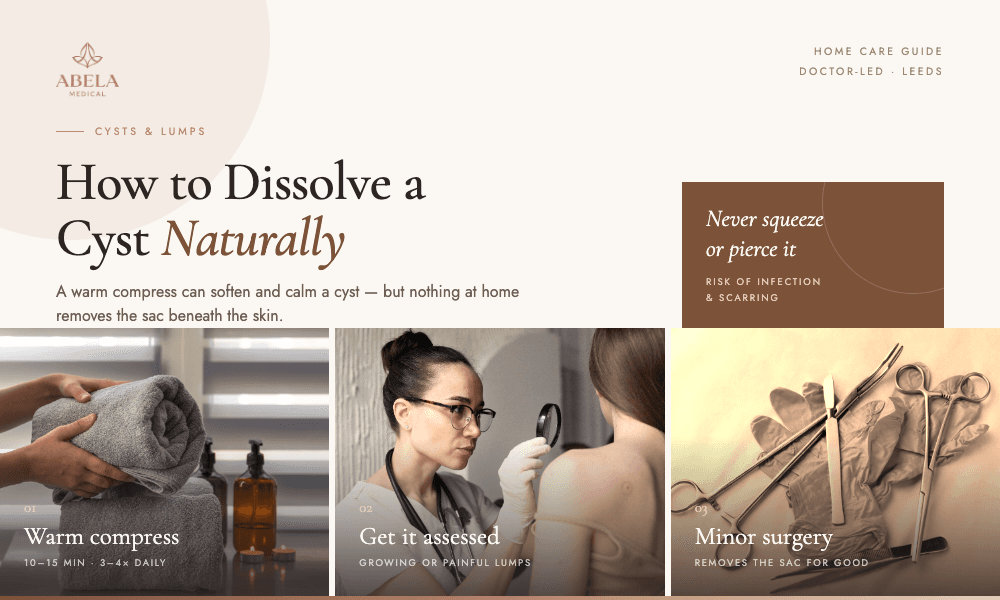
You cannot fully dissolve a cyst naturally because no home remedy removes the sac beneath the skin. What you can do is calm the cyst. A warm compress softens the contents, eases swelling, and may help the lump drain on its own.
This guide explains how to dissolve a cyst naturally as far as home care allows, which remedies genuinely help, and which ones cause harm. It also covers the signs that mean a lump needs a doctor. Most skin cysts are harmless, so there is no need to panic. Still, the right care at home makes a real difference in comfort and lowers the risk of infection while you decide on your next step.
Key Takeaways
- A warm compress is a safe treatment for calming down the cyst at home
- There is no natural treatment which could eliminate the cyst wall, thus the cyst comes back
- Do not try to squeeze, puncture, or cut the cyst
- A physician can easily remove the entire cyst
Can You Dissolve a Cyst Naturally at Home?
Home care can soften a cyst, settle redness, and encourage drainage, but it cannot dissolve the sac itself. A cyst is a small pocket that fills with fluid or a soft, cheese-like material. Creams, oils, and compresses only reach the contents. The sac stays behind, which is why a cyst that drains at home often refills within weeks or months.
That does not make home care pointless. Gentle steps help keep the cyst comfortable and reduce the risk of infection. For a lump that keeps refilling, minor surgery is the only reliable way to remove the entire sac. Doctors treat all kinds of lumps and bumps this way every day, often in under half an hour.
What Causes a Cyst to Form?
A cyst forms when skin cells or oil become trapped instead of shedding normally. Common triggers include:
- A blocked hair follicle or oil gland
- Damage or injury to the skin
- A family history of cysts, which is common with pilar cysts
- Acne-prone or oily skin
- Hormone changes that increase oil production
Anyone can develop a cyst at any age. They are very common, and most stay harmless.
Common Symptoms of a Cyst
Most skin cysts follow a familiar pattern. Typical signs include:
- A round, smooth lump under the skin
- Slow growth over months or years
- A small dark spot, called a punctum, in the centre
- A thick, yellowish discharge with an unpleasant smell if it leaks
- Redness, warmth, and pain if the cyst becomes inflamed or infected
A slow-growing lump that does not hurt is rarely serious. Fast growth or a hard, fixed lump needs a medical check.

Worried About a Lump That Keeps Growing?
- The doctor-led team at Abela Medical in Leeds can examine your lump, confirm what it is, and talk you through every safe option in an honest consultation
Home Remedies for Cysts: What Helps and What Doesn't
The best home remedies for cysts aim to soothe rather than remove. Used with patience, they help keep the area calm and give the cyst the best chance to settle on its own.
How a Warm Compress Helps a Cyst
Doctors recommend warm compresses for cyst swelling since heat increases blood circulation. Increased blood flow softens the contents, reduces swelling, and facilitates drainage. Here is what you need to do:
- Immerse a clean flannel in warm, not hot, water.
- Take it out and place it on the cyst for 10 to 15 minutes.
- Do this three to four times a day.
- Wash the flannel after each application to prevent infection.
Keep this up for a week or two. Many small, inflamed cysts settle with warmth and time alone.
How to Shrink a Cyst Without Making It Worse
If your goal is to shrink a sebaceous cyst, then you should be prepared to be patient and take good care of yourself. Wash the area with soap and water, and wear loose-fitting clothes to prevent anything from irritating the lump. Some individuals use tea tree oil for its antibacterial properties; however, scientific evidence for its benefits is very limited, and undiluted oil may cause burns. Apply a drop or two, and stop applying if you feel pain or see redness.
Drawing Out a Sebaceous Cyst Safely
Warmth is the only safe method for drawing out a sebaceous cyst. Should the cyst open and release its contents, do nothing else but wash the affected area, apply a plaster, and change the dressing each day.
Can a Cyst Go Away on Its Own?
So, can a cyst go away on its own? Sometimes, yes. Small cysts can shrink until you barely notice them, and an inflamed cyst often calms down within a few weeks. Some stay the same size for years without causing any trouble, and doctors are happy to leave those alone.
The catch is the sac. Because it stays under the skin, a fading cyst can refill later. If a lump keeps returning, growing, or leaking, it is unlikely to clear on its own without treatment.
Fed Up With a Cyst That Keeps Coming Back?
- Draining alone rarely stops a cyst from returning
- The doctors at Abela Medical remove the entire sac in a single short visit, so the cyst is far less likely to return

Is Sebaceous Cyst Removal at Home Safe?
No. Removing a sebaceous cyst at home is one of the riskiest things you can do to your skin. Popping videos make it look quick and satisfying, but the results tell a different story. Avoid all of the following:
- Compressing or bursting the cyst with your fingers
- Stabbing it with a needle or pin
- Slashing it with a knife
- Tugging on the punctum or scabs
These methods may introduce bacteria into the cut, lead to permanent scarring, and leave the pouch behind, allowing the cyst to redevelop regardless. Such procedures using household equipment cannot be performed under sterile conditions.
How to Get Rid of a Cyst for Good
The only proven way to prevent a cyst from returning is professional treatment that addresses the sac. If you have searched for how to get rid of a cyst, a doctor will usually offer one of these options:
- Drainage. A small cut releases the contents of a swollen or infected cyst. Relief comes quickly, but the sac remains so that the cyst may return.
- Minor surgery. Under local anaesthetic, the doctor makes a small cut, removes the whole cyst with its sac, and closes the skin with stitches. Most procedures take around 20 to 30 minutes.
- Prescribed medicines. If a cyst is infected, a doctor may prescribe a course of antibiotics before or after removal.
Removing the complete sac makes the cyst far less likely to return in the same spot. Like any procedure, removal carries small risks, including a fine scar, mild bruising, and a low chance of infection, which the practitioner explains before treatment. The NHS often leaves harmless cysts in place, as it classes removal as cosmetic, so many people choose a private clinic instead.
Conclusion
It is impossible to dissolve the cyst with natural methods, as there are no home remedies that will remove the sac under your skin. The warm compress is still the safest method to help the cyst soften, relieve discomfort, and drain naturally, while squeezing and cutting will only lead to negative consequences. If you have a recurring cyst or it causes trouble, complete removal is the best option for you.
Our professional medical team at Abela Medical will help you safely and honestly remove the cyst in Leeds.
FAQs About Dissolving a Cyst Naturally
What dissolves a cyst fast at home?
Nothing truly dissolves a cyst at home. A warm compress used three to four times a day is the fastest safe way to soften the lump and ease swelling. If nothing changes after two weeks, ask a doctor to look at it.
Does apple cider vinegar get rid of cysts?
There is no scientific proof that consuming apple cider vinegar causes any shrinking or removal of cysts. Undiluted apple cider vinegar can irritate the skin, causing it to become sore. Therefore, use only warmth and hygiene.
Can toothpaste remove a cyst overnight?
No. Toothpaste has no effect on the sac under the skin, and its harsh ingredients often dry out or inflame the area. Overnight fixes for cysts do not exist.
How long does a cyst take to go away on its own?
An inflamed cyst usually settles within two to four weeks with warm compresses. The lump itself can last for months or years because the sac stays in place. Some cysts never disappear without removal.
Is it safe to pop a cyst with a needle?
No. A needle pushes bacteria into the skin, increases the risk of scarring, and leaves the sac behind, allowing the cyst to refill. Doctors drain cysts with sterile tools and proper technique for good reason.
Does cyst removal hurt?
The procedure is conducted under local anaesthesia, meaning there will be very little pain involved, mostly just pressure.