Acne lesions tend to leave some kind of mark on your skin that impacts your self-confidence levels. Knowing how to remove acne scars involves understanding that each one requires a specific approach. Although your skin will naturally heal small lesions, significant texture changes can only be reversed through specialised medical procedures that help build a smooth, healthy surface by rejuvenating the skin's collagen.
Key Takeaways
- Proper treatment depends on the type of scar: Various kinds of scars will require different clinical approaches, such as lasers, peeling, and needling.
- Prompt treatment prevents more serious damage: The sooner you address active acne, the less likely you are to develop deep scars.
- Scar removal is gradual: Advanced procedures can help stimulate your body's natural healing process, improving your skin texture for weeks.
- It is important to shield yourself from the sun: Broad-spectrum sunscreen will protect your skin from harmful UV rays and reduce the risk of scarring and discolouration.
Clear Your Skin: How to Get Rid of Acne Scars for Good
To successfully clear your complexion, you must understand how these marks form in the first place. When severe acne causes deep inflammation, it damages the surrounding skin tissue and the underlying collagen support system. As the body attempts to repair this local damage, it sometimes produces too little collagen, creating depressed or pitted scars. In other cases, the body produces too much collagen, resulting in raised, thick scars.
Many times, individuals tend to equate post-acne reddening with the formation of permanent scars. Marks that appear as darkened or reddish in colour but flat actually indicate post-inflammatory hyperpigmentation or erythema, which refers to skin discolouration without any skin tissue damage. Such spots can be effectively treated with mild home care and superficial resurfacing.
Finding the Right Acne Scar Treatment
Choosing an effective acne scar treatment depends entirely on the depth, shape, and severity of your marks. While superficial discolouration fades with light daily exfoliators, deep-seated depressions require clinical techniques that physically remodel the deeper layers of your skin. An experienced aesthetic practitioner examines your tissue under specialised light to design a safe, highly personalised skin recovery plan.

Tired of Stubborn Acne Scars Masking Your Natural Complexion?
- Standard over-the-counter creams rarely improve deep, pitted scars
- The expert medical team at Abela Medical assesses your unique skin texture to provide safe, highly targeted treatments that restore your confidence
Understanding the Different Types of Acne Scars
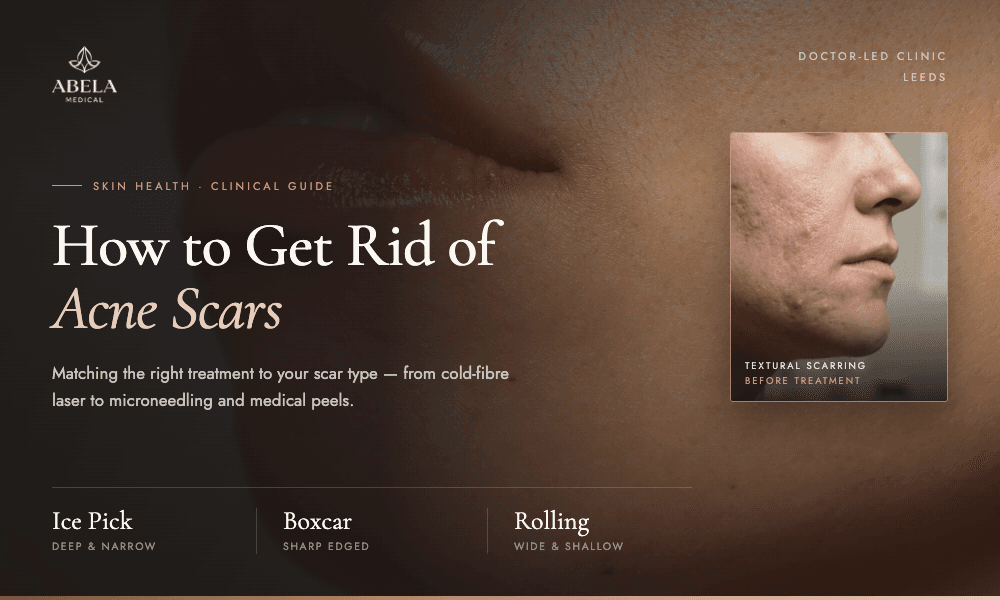
Before starting any recovery programme, you must identify your specific scar pattern. Acne typically causes three main types of acne scars:
Ice Pick Scars
The tiny, narrow holes look as if a sharp object has left an indentation in the skin's surface. These scars result from an acute inflammatory reaction that damages the collagen column, leaving a very deep, narrow hole. Due to the depth of the scar, regular skin creams won't work.
Boxcar Scars
Round or oval scars with sharply outlined vertical edges are similar to those caused by chickenpox and result from widespread inflammation and destruction of the skin's underlying supportive structures. To smooth out the box-like scar edges, clinicians should resort to methods that restore volume loss.
Rolling Scars
Wide, shallow indentations on the cheeks and jawline result from fibrous bands that connect the upper layers of the skin to the deeper layers and pull the skin's surface downward. To fix the problem, one should dissolve the bandage and encourage collagen synthesis.
Laser Treatment for Acne Scars
Advanced laser treatment for acne scars uses focused light energy to remove damaged outer skin layers and stimulate the production of fresh collagen deep within the dermis. Devices like the UltraClear Laser deliver precise, cold-fibre energy to resurface the skin without causing excessive heat damage. The skin heals rapidly, replacing old scar tissue with firm, smooth, and healthy cells.
Microneedling for Acne Scars
Clinicians perform microneedling for acne scars to kickstart the body's natural healing response. An advanced micro-needling device, such as the SkinPen Microneedling, creates thousands of microscopic channels in the skin. This controlled micro-injury triggers rapid cell turnover and abundant collagen production, which raises depressed scars to the surface.
Chemical Peels for Acne Scars
Chemical peels used in the medical field to treat acne scars remove the damaged stratum corneum. As the upper skin layer flakes off, a new layer is formed that is evenly coloured.
Ready to Reclaim Smooth, Glowing Skin?
- You do not have to live with permanent acne scars or uneven skin texture
- A professional assessment safely matches the exact treatment combination to your specific scar types and skin tone

What is the Best Treatment for Acne Scars?
The appropriate procedure for treating acne scars varies depending on skin type, scar depth, and treatment goals. Procedures such as fractional laser resurfacing or microneedling work best for deep scars, especially ice pick and boxcar scars.
For shallow scars, a combination of energy devices and dermal fillers is typically used to raise the depressed area immediately. For patients with active acne and scars, specialists commonly use chemical peels to treat the acne first, then address the textural scars.
How to Remove Acne Scars Naturally
To learn how to get rid of acne scars naturally, you need to realise that natural treatments are suitable for getting rid of mild red spots and not pitted marks. Daily routines can help your skin heal itself and prevent further problems:
- Apply Vitamin C: This antioxidant helps inhibit excessive pigment production and promotes collagen production.
- Use Rosehip Oil: It has fatty acids and vitamins which help regenerate skin cells.
- Protect from the Sun: UV rays deepen scars and break down collagen, so you have to reapply sunscreen regularly.
- Moisturise: It is important to drink enough water and use hyaluronic acid.
Conclusion
To conclude, finding out how to get rid of acne scars involves matching your specific scar type with the right combination of clinical treatments. While natural remedies support overall skin health and fade light discolouration, professional therapies like lasers, microneedling, and chemical peels offer the only effective way to rebuild lost collagen and smooth deep pits. The female-led, doctor-governed team at Abela Medical provides the best acne scar treatment in Leeds to help you achieve a smooth, radiant, and beautifully clear complexion safely and effectively.
Frequently Asked Questions (FAQs)
How many laser sessions will I need to clear my acne scars?
Most clients need to undertake a treatment program ranging from three to six treatments, depending on the severity of the scars and the type of lasers used.
Is microneedling painful?
Topical anaesthetic cream is applied before the treatment to ensure you do not experience any discomfort. Most people only feel a vibration and pressure during the treatment process.
Will my acne scars return after treatment?
No, the process remodels your collagen fibres in a way that makes the skin changes permanent. Nonetheless, you have to act quickly to control any future acne breakouts to avoid developing more scars.