
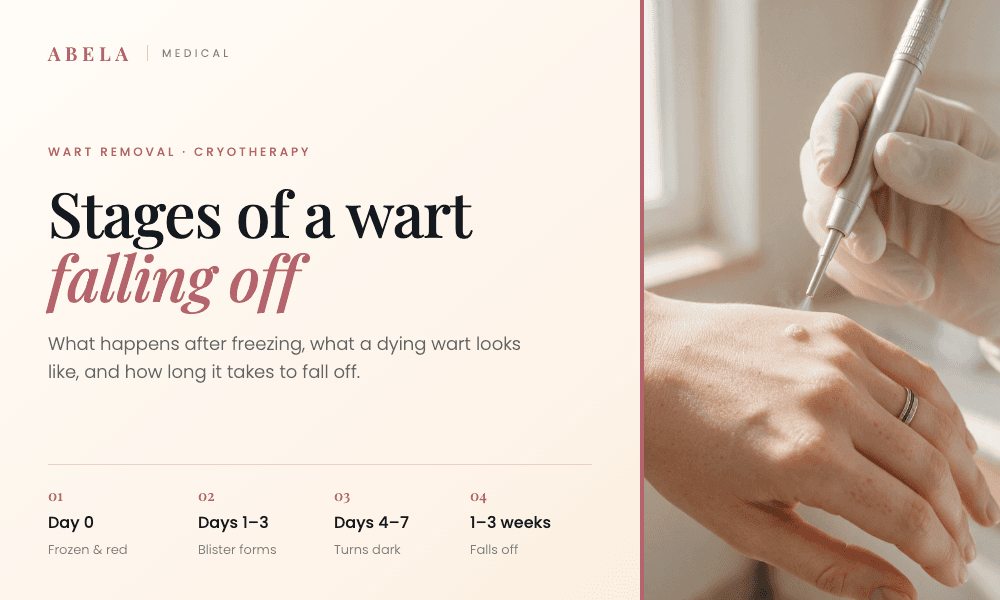
A wart does not drop off all at once. It goes through a few clear stages first. After a freeze treatment, the skin turns red and may blister. Next, the wart turns dark and dries into a scab. Finally, the scab lifts away and fresh pink skin appears beneath.
Most warts fall off within one to three weeks. However, full skin repair can take up to six weeks, and thick warts may need more than one session. This guide explains the stages of a wart falling off, so you know what is normal and when to get help.
Key Takeaways
- A treated wart turns red, blisters, darkens, forms a scab and then falls off
- Most warts fall off one to three weeks after a freeze treatment
- A wart that turns black is often a good sign, as its blood supply has stopped
- Do not pick or pull the wart, as this can spread the virus and leave a mark
- See a doctor if a wart bleeds, changes, keeps coming back or sits on your face
Why Does a Wart Fall Off After Treatment?
A wart is a small, rough lump on the skin. A virus called HPV (human papillomavirus) causes it. The virus makes skin cells grow too fast, so a hard bump forms. Warts often appear on the hands, fingers, knees and feet. A wart on the sole of the foot is called a verruca.
Warts are not harmful. However, they can feel sore, itch or look unsightly. The NHS notes that most warts go away on their own, but this can take months or even years.
So, why does a wart fall off once you treat it? Treatment damages the wart tissue and cuts off its blood supply. Without blood, the wart dies. Your body then treats it as dead skin. It dries out, lifts from the healthy skin below and drops away. In fact, treatment can also prompt your immune system to fight the virus.
Common Types of Warts
Warts come in a few forms. Each one heals in the same broad stages, but some take longer than others.
- Common warts: firm, rough lumps on the hands, fingers and knees
- Verrucas (plantar warts): hard, flat patches on the soles of the feet, often with tiny black dots
- Flat warts: small, smooth, round bumps, often on the face or legs
- Filiform warts: thin, long growths, often near the mouth or nose
- Mosaic warts: a cluster of warts in one area, often on the hands or feet
Verrucas tend to clear the slowest. This is because your weight pushes them deep into thick skin.

Tired of a Wart That Will Not Go Away?
- Pharmacy creams can take up to three months and do not always work
- The doctor-led team at Abela Medical checks your wart and removes it safely in our CQC-regulated Leeds clinic
The Stages of a Wart Falling Off
Freeze treatment, also known as cryotherapy for warts, is one of the most common methods. A clinician applies very cold liquid nitrogen to the wart for a few seconds. Below are the stages of wart healing after freezing, in order. Other treatments follow a similar path, though the timeline can differ.
Stage 1: Redness and Mild Pain (Straight After Treatment)
As the wart freezes, it turns white, along with a thin rim of skin around it. Within minutes, the area thaws and turns red. You may feel a burn, a sharp prick or a dull ache for a few hours.
This is normal. It shows the cold has reached the wart tissue. A simple painkiller, such as paracetamol, can ease the discomfort if you need it.
Stage 2: A Blister Forms (Day 1 to Day 3)
Within a day, the skin may swell a little. A blister often forms under or around the wart. It may hold clear fluid or blood. A blood blister looks dark red or purple. Both are normal.
In fact, the blister is a good sign. It helps to lift the wart away from the healthy skin beneath. So, leave it alone and do not pop it. If it bursts on its own, clean it gently with soap and water and cover it with a plaster.
Stage 3: The Wart Turns Dark (Day 3 to Day 7)
Next, the wart starts to change colour. It may turn grey, brown or black. This happens because the tiny blood vessels inside the wart have clotted. With no blood supply, the wart tissue dies.
Many people worry when they see a wart turning black. However, it usually signals that the treatment has worked. At this point, the wart may also look flatter, drier and smaller than before.
Stage 4: A Scab Forms (Week 1 to Week 2)
As the blister dries out, a hard crust forms on top. The dead wart sits inside or under this scab. The skin may feel tight or itchy.
Try not to scratch. An itch is part of normal repair. However, a scratch can tear the new skin and carry the virus to your fingers or nails.
Stage 5: The Wart Falls Off (Week 1 to Week 3)
Finally, the scab and dead wart lift away. This often happens in the bath or shower, when the skin is soft. NHS patient advice notes that scabs on treated skin tend to fall off after about two to three weeks.
Let the wart come off on its own. If you pull it too soon, the skin may bleed and take longer to heal. It may also leave a mark.
What If Only Part of the Wart Falls Off?
Sometimes the top layer comes away, but a small rough patch stays behind. This means some wart tissue remains. A repeat session is often needed to clear it fully.
Stage 6: New Skin Appears (Week 2 to Week 6)
Beneath the scab, you will find soft, pink skin. It may look shiny or slightly dented at first. Over the next few weeks, it slowly blends with the surrounding skin.
Full repair can take up to six weeks. On the lower legs and feet, it can take longer. In darker skin tones, the area may heal lighter or darker than the surrounding skin. This often fades with time, though in some cases the change can last.
Wart Recovery Timeline at a Glance
| Stage | When | What You See |
|---|---|---|
| Redness | Straight after treatment | White skin that turns red and sore |
| Blister | Day 1 to Day 3 | A clear or blood blister |
| Dark colour | Day 3 to Day 7 | A grey, brown or black wart |
| Scab | Week 1 to Week 2 | A dry, hard crust |
| Wart falls off | Week 1 to Week 3 | The scab and wart lift away |
| New skin | Week 2 to Week 6 | Pink skin that blends in over time |
How Long Does It Take for a Wart to Fall Off?
The answer depends on the treatment you choose, the size of the wart and where it sits on your body. Here is a simple guide.
After a Freeze Treatment
So, how long does it take for a wart to fall off after freezing? Most warts drop off within one to three weeks. Small, thin warts on the hands tend to clear first. Thick warts and verrucas may need a repeat freeze every two to three weeks, as NHS dermatology advice explains.
After Salicylic Acid
Salicylic acid gels and paints soften the wart layer by layer. You apply them every day. The NHS notes that these products can take up to three months and do not always work. You should not use them on your face.
After Minor Surgery
A doctor can also remove a wart under local anaesthetic. In this case, the wart is gone on the same day. The small wound then heals over one to two weeks. This option suits warts that have not responded to other treatments.
With No Treatment
Some warts fade on their own. However, this can take months or years. In the meantime, the wart may grow, hurt or spread to other parts of your skin.
What Does a Dying Wart Look Like?
Knowing the signs that a wart is on its way out helps. So, what does a dying wart look like? Watch for these changes:
- The wart turns grey, brown or black
- It looks flatter and smaller than before
- The surface feels dry, flaky or crusty
- Tiny black dots appear, then fade
- The skin around it looks red or a little swollen for a few days
How to Tell a Wart Has Gone for Good
A wart has fully cleared when:
- The fine lines of your skin run across the area again
- The black dots have gone
- The skin feels flat and smooth
- It does not hurt when you press on it
If a rough patch remains, the wart is still there. That's why a check with a clinician is worth it before you stop treatment.
Not Sure If Your Wart Has Gone for Good?
- If a wart keeps coming back, it needs a proper check
- A GMC-registered doctor examines your wart in person
- You get a clear plan, with honest advice on what will work
- Simple wart removal at Abela Medical starts from £185

How to Care for Your Skin as a Wart Heals
Good aftercare helps the wart fall off cleanly. It also lowers the risk of infection and scars.
Do
- Keep the area clean and dry
- Cover a blister with a plaster if it rubs on shoes or clothes
- Wash your hands after you touch the wart
- Change your socks every day if you have a verruca
- Wear flip-flops in public pools and gym showers
Do Not
- Pop the blister or pick the scab
- Pull the wart off before it is ready
- Share towels, socks or shoes
- Shave over the area, as this can spread the virus
- Use pharmacy wart products on your face
Signs of Infection or Other Problems
Most warts heal without trouble. However, you should call a doctor if you notice:
- Pain that gets worse after the first two days
- Pus, a bad smell or a yellow crust
- Red skin that spreads out from the area
- Skin that feels hot, or a high temperature
- A large blister that is sore or gets in the way of daily tasks
The NHS also advises seeing a GP if a wart bleeds, changes how it looks, keeps coming back, or sits on your face or genitals. A growth that bleeds or changes could be a different skin problem. So, it needs a proper check.
Why Some Warts Come Back
Treatment removes the wart. However, it does not always clear every trace of the virus from your skin. So, a new wart can appear in the same spot or nearby. That's why some warts need more than one session.
A wart is more likely to return if:
- You pick, bite or scratch it
- Your skin stays damp for long periods, such as in sweaty shoes
- Your immune system is weak
- Some wart tissue was left in the skin
A clinician can check the area once it heals. If any wart tissue remains, they can treat it early.
When to See a Doctor for Wart Removal
You do not have to wait months or years for a wart to fade. Professional wart removal is quick and safe in the right hands. Book a check if:
- Pharmacy treatments have not worked after three months
- The wart hurts, bleeds or catches on your clothes
- You have a wart on your face, where acid products are not safe
- You have a large or painful verruca and want verruca removal
- You are not sure the lump is a wart at all
Also, some lumps look like warts but are not. Skin tags, moles and seborrheic keratoses (rough, waxy growths) can look similar. So, a doctor should examine any growth you are unsure about. At Abela Medical, our doctors also offer lump and skin tag removal once they confirm the growth.
Conclusion
The stages of a wart falling off follow a clear path. First, the skin turns red and may blister. Next, the wart darkens and forms a scab. Then the scab lifts away, and fresh pink skin settles over a few weeks. Most warts fall off within one to three weeks, though some need more than one session.
If you want a wart gone for good, the doctor-led team at Abela Medical can help. We offer safe wart removal in Leeds at our CQC-regulated clinic in Yeadon. Our doctors assess your wart in person and only advise what will genuinely work for you.
Frequently Asked Questions
How do I know if my wart is falling off?
Your wart may turn dark, dry out and form a scab. Its edges may also lift from the skin. These signs show the wart tissue has died and will soon drop away.
Is it normal for a wart to turn black after treatment?
Yes. A wart that turns black after a freeze treatment is usually a good sign. It means the blood vessels inside the wart have clotted, so the tissue can no longer survive.
Can I pull off a wart that feels loose?
It is best to wait. Let the wart fall off on its own. If you pull it too soon, the skin may bleed, heal more slowly and leave a mark.
What does the skin look like after a wart falls off?
You will see a smooth patch of pink skin. It may look shiny or slightly dented at first. Over a few weeks, it blends in with the surrounding skin.
Why has my wart not fallen off after two weeks?
Thick warts and verrucas often need more time or more than one session. If part of the wart is still there after three weeks, speak to your clinician. They may suggest a repeat treatment.
Does wart removal leave a scar?
Most warts heal without a clear scar. However, a small mark or a change in skin colour can happen, especially if you pick the scab. Minor surgery leaves a small scar, which fades over time. Your doctor will explain the risks before treatment.
How much does wart removal cost in Leeds?
At Abela Medical, simple wart removal for one to three warts starts from £185. Verruca removal starts from £350. The final price depends on the size, number and site of your warts, and we confirm it at your consultation.